
NEW Upcoming Notice: SOA CET 2026 Registration Has Been Started Click Here to Apply Now|NEW Check All Upcoming Notices Click Here

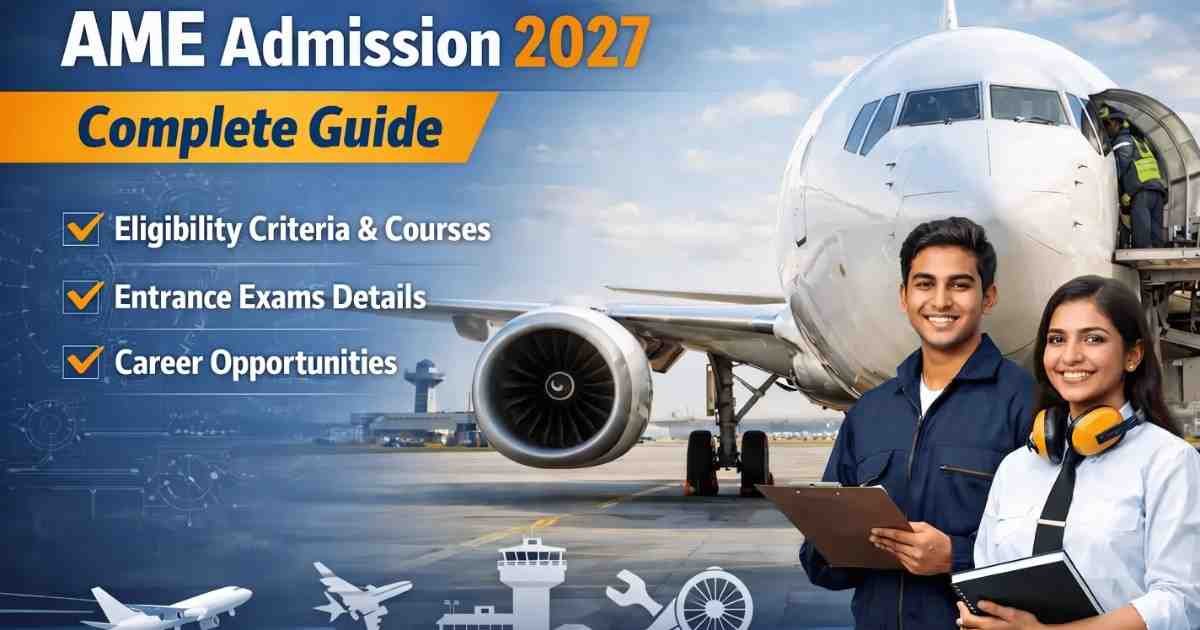
AME Admission 2026

Your complete guide to AME Admission 2026 eligibility, fees, syllabus, top colleges, and career scope in India’s fastest-growing aviation industry.
What is AME Admission?

AME Admission is the process of enrolling in Aircraft Maintenance Engineering programs in the DGCA-approved training institutes in India. The most important thing in becoming a licensed Aircraft Maintenance Engineer, a highly skilled professional, is getting AME admission, as the holder of this qualification is in charge of inspecting, maintaining, repairing and certifying aircraft as fit to fly.
The AME admission 2026 has already commenced in the major institutes, such as the School of Aeronautics Common Entrance Test (SOACET), which provides students with a chance to enter the Indian aviation industry, which has experienced a boom and offers great career opportunities and high salaries.

Program Highlights

Industry Demand
0%
Job Placement Rate
0%
Practical Training
0%
Global Recognition
0%

Why is AME Admission Important?

Securing AME admission at a DGCA-approved institute is essential because:

  • Training that will qualify you to be eligible to receive the AME license can only be done in institutes that are approved by DGCA.
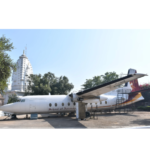
  • Quality infrastructure determines your hands-on learning experience with actual aircraft.
  • Placement opportunities are directly influenced by the industry contacts of your institute.
  • The early admission makes sure that you do not miss out on the few seats (usually 60-100 per institute).

Major Fact: India is already in need of more than 15,000 licensed AMEs that will facilitate fleet growth by such airlines as Air India, IndiGo, SpiceJet, and Vistara. AME Admission 2026 will place you in a good position to be in this high-demand market.

AME Admission Eligibility Criteria 2026

To apply to AME admission, candidates should ensure that they have checked the eligibility requirements. The standards are uniform across most DGCA-accredited institutions, but can vary slightly.

Qualifications for AME Admission

Route 1: After 10+2 / Intermediate

RequirementDetails
Qualification10+2 or equivalent from a recognized board
Compulsory SubjectsPhysics AND Mathematics
Optional SubjectChemistry OR Computer Science
Minimum Percentage50% aggregate in PCM / PC+Math
Reserved Categories45% for SC/ST candidates
Boards AcceptedCBSE, ICSE, All State Boards, NIOS

B.Sc. graduates tend to enter AME admission with fewer difficulties, and can be exempted from some foundation modules due to their undergraduate studies.

Route 3: Following Engineering Diploma (Lateral Entry)

RequirementDetails
QualificationBachelor of Science from a UGC-recognized university
Required SubjectsPhysics, Chemistry, Mathematics (all three)
Minimum Percentage50% aggregate in the degree
Pattern AcceptedBoth semester and annual patterns

Important: Both Physics and Mathematics are non-negotiable. Chemistry OR Computer Science is acceptable as the third subject.

Route 2: B.Sc. (Science Graduate) +

RequirementDetails
Qualification3-year Engineering Diploma
Eligible BranchesMechanical, Electrical, Electronics, Instrumentation, Telecommunications
RecognitionAICTE-approved or State Technical Board
AdvantagePossible exemptions and reduced course duration

Relevant engineering diploma graduates will have an opportunity to make faster advancements through AME admission and training due to their technical background.

Extra AME Admission Requirements.

Age Criteria:

  • Minimum Age: 16 years old on admission.
  • Maximum Age: There is no limit in general, but most candidates are between 17 and 25 years.

Medical Fitness:

  • Eventually, a DGCA Class II Medical Certificate is necessary.
  • Can be obtained after provisional AME admission
  • Should be an Aviation Medical Examiner approved by DGCA.
  • Vision (correctable to 6/6), colour perception, hearing and overall health.

Nationality:

  • Indian citizens eligible
  • They are open to foreign nationals (with extra documentation and approvals).

English Language:

  • Simple ability to read and write English.
  • All DGCA examinations, technical documentation and aviation documents are written in English.

The AME Admission Process- Step-By-Step

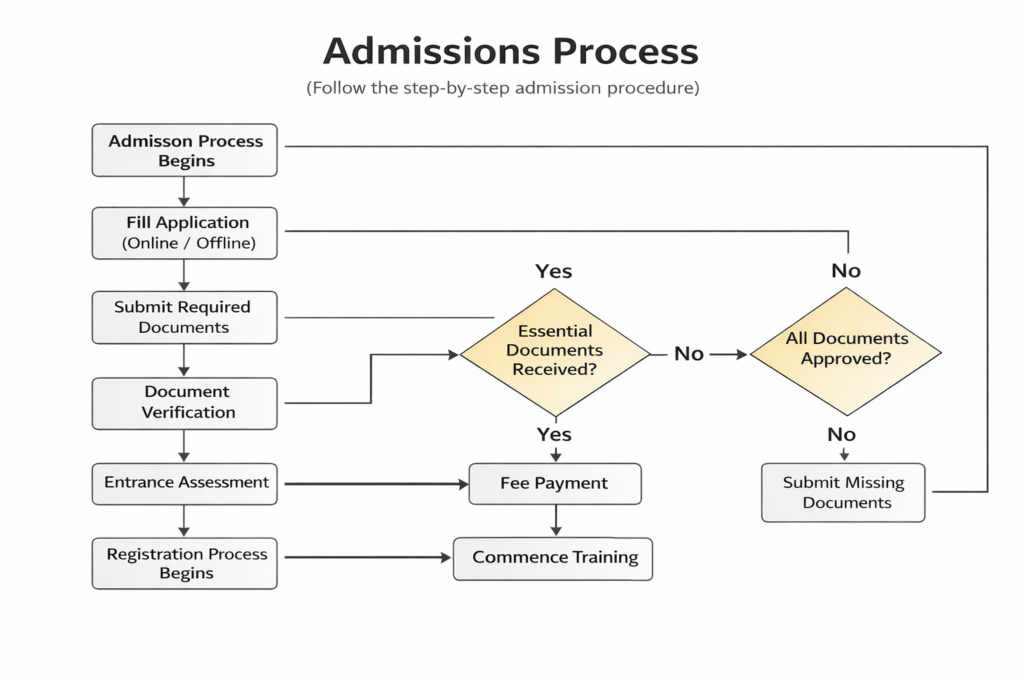
The AME admission process is simple and student-friendly. Follow these steps to secure your seat.

AME admission process flowchart step by step guide

Step 1: Choose the DGCA-Approved Research and Select

What to Check:

  • DGCA approval certificate (most important)
  • Infrastructure: Does the institute possess real aircraft, engines and workshops?
  • Faculty: Do they have DGCA-approved and industry-experienced instructors?
  • Placement record: What percentage of students get jobs?
  • Location and hostel facilities.

Top Institutes for AME Admission:

  • School of Aeronautics (SOACET) soacet.org.
  • Other DGCA-approved organizations across India

Verify you meet:

  • Educational qualification (10 + 2 PCM 50% / B.Sc. / Diploma)
  • Age (must be 16 years old and above)
  • Subject requirements (Physics + Mathematics required)

Pro Tip: When you are on the edge of a percentage, some institutes have conditional admission with an opportunity to raise the scores.

Step 2: Check Eligibility Criteria

Do mock tests with time limits to develop speed.

Improve on weak areas that emerge during mock tests.

Step 3: Entrance Exam (Optional)

Entrance exams to AME admission are conducted in many institutes:

For SOACET:

  • Register at www.soacet.org
  • Fill out the online application form
  • Application fee (usually ₹1,000)
  • Get the admit card before the exam date.

Other institutes provide:

  • Direct merit-based admission (10+2).
  • Management quota seats
  • NRI/foreign national quota

Step 4: Take the Entrance Exam Prep and Appear.

Exam Pattern (Typical):

  • Tests: Physics, Chemistry, Mathematics, English/Aptitude.
  • Question Type: Multiple Choice Questions (MCQs).
  • Duration: 2-3 hours.
  • Syllabus: According to the 10+2 NCERT curriculum.
  • Passing Requirement: Institute cut-off marks.

Preparation Strategy:

  1. Rewrite NCERT textbooks (Class 11-12) extensively.
  2. Pay attention to the Physics and Mathematics numericals.
  3. Answer past year question papers.

Step 5: Results Check and Counselling

After Entrance Exam:

  • Publication of results on the institute site (usually 2-4 weeks following the exam)
  • The merit list is made based on scores.
  • Candidates are invited to counselling.
  • Take timed mock tests to build speed.
  • Strengthen weak areas identified in mock tests.

Counselling Process:

  1. Turn in original documentation to the assigned venue.
  2. Checks by the admission committee on the documents.
  3. Merit rank and availability of seats.
  4. Stream choice (Mechanical B1 or Avionics B2)
  5. Discussed fee payment options.

Step 6: Document Verification

Original Documents Required:

DocumentPurpose
10th Mark Sheet & CertificateProof of age and basic educational qualification
12th Mark Sheet & CertificateEligibility verification for AME admission
Transfer CertificateProof of leaving the previous school/college
Character CertificateVerification of student conduct and behaviour
Passport-size Photographs (6–8)Required for admission records and ID cards
Aadhar Card / ID ProofIdentity verification
Domicile CertificateRequired for state quota eligibility (if applicable)
Caste CertificateRequired to avail of reservation benefits (if applicable)
Migration CertificateNeeded if from a different board or state
Income CertificateRequired for scholarship eligibility

Step 7: Fee Payment and Admission Confirmation

Fee Payment Options:

  • Single instalment full payment (can be a discount)
  • Semester-wise instalment plan
  • Module-based payment (in AME programs)
  • Education loan (with bank tie-ups)

After Fee Payment:

Get a conditional letter of admission.

Obtain a student ID card.

Student portal.

Allocation of hostel room (where necessary).

Step 8: Complete Medical Examination

DGCA Class II Medical Certificate:

  • Should be performed at a certified medical facility that is approved by DGCA.
  • Staff of authorised doctors at the institute.
  • Cost: ₹2,000-3,000 approximately
  • Validity: Periodic renewals when the course is taken.

Medical Tests Include:

  • Vision test (near and distance vision)
  • Colour vision test (Ishihara plates)
  • Hearing assessment
  • Blood pressure, heart rate.
  • General physical examination

Step 9: Attend Orientation/Begin Classes.

Orientation Program:

  • Background of DGCA regulations.
  • Tour of campus and facilities.
  • Faculty introduction
  • Course structure overview
  • Student handbook distribution
  • Hostel regulations and rules.

Classes Typically Start:

  • July-August of the regular batch.
  • January-February mid-year batch (some institutes)

Your AME admission is now complete! You are officially an AME student.

Step: 01

Application Form

Fill out the AME admission form online or offline via the institute's official website.

Step: 02

Entrance Exam / Direct Admission

Some institutes conduct entrance exams; others offer direct admission based on academic merit.

Step: 03

Counselling & Seat Allocation

Shortlisted candidates are called for counselling. Choose your specialization and confirm your seat preference.

Step: 04

Document Verification

Submit academic certificates, identity proof, medical fitness documents and photographs.

Step: 05

Admission Confirmation

Pay the admission fees and receive your confirmation letter. Seats are limited — apply early!

Entrance Exam for AME Admission

Knowing which entrance exams are accepted by AME admissions can guide you on how to plan your approach to the application.

Institute-Specific Entrance Exams

SOACET (School Of Aeronautics Common Entrance Exam):

  • Conducted by the School Of Aeronautics
  • Application: www.soacet.org
  • Exam Mode: Online/Offline
  • Subjects: Physics, Chemistry, Mathematics, English
  • Eligibility: 10+2 with PCM (50%)

Other AME Entrance Tests: Entrance tests are similar at other DGCA-approved institutes that have their own tests.

Direct Admission No Entrance Exam

Some institutes offer AME admission based on:

  • 10+2 merit marks (usually 70% + in PCM)
  • Management quota
  • Donation/NRI seats
  • Diploma/B.Sc. degree (lateral entry)

Direct Admission to be considered:

  • In case there is a conflict in the dates of the entrance exams.
  • In case your 10+2 marks are very high.
  • When you do not want to get involved in competitive tests.

AME Admission Dates & Timeline 2026

Planning your AME admission requires knowing important dates and deadlines.

Tentative Timeline for AME Admission 2026

EventTentative PeriodAction Required
Notification ReleaseDecember 2025Check eligibility criteria
Application OpensJanuary 2026Register online, fill form
Application DeadlineMarch 2026Submit before the last date
Admit Card ReleaseApril 2026Download and print
Entrance ExaminationApril 2026Appear at the test center
Answer Key PublicationApril 2026Self-assess performance
Result DeclarationMay 2026Check the merit list
Counseling/Document VerificationMay–June 2026Attend with documents
Seat AllocationJune 2026Accept seat, pay fees
Final AdmissionJune 2026Complete formalities
Classes CommencementJuly–August 2026Begin training

Important Notes:

  • Times are not final, confirm on the institute websites with the check officials.
  • Priority processing is usually given to early applications.

Application Strategy:

  • Apply in January-February (best seat availability).
  • Wait, not till the March deadline.
  • Use the form to the latter in order to pass.

Documents That Are Required To Be Admitted to AME

Being prepared with all necessary documents ensures smooth AME admission processing.

Essential Documents Checklist

Educational Documents:

  • [ ] 10th Mark Sheet (original + 2 photocopies)
  • [ ] 10th Certificate showing Date of Birth (original + 2 photocopies)
  • [ ] 12th Mark Sheet (original + 2 photocopies)
  • [ ] 12th Certificate (original + 2 photocopies)
  • [ ] Transfer Certificate of the institution attended previously.
  • [ ] Migration Certificate (when in another state/board)

For B.Sc./Diploma Candidates:

  • [ ] Mark sheets at the end of each semester/year.
  • [ ] Degree/Diploma certificate.
  • [ ] Temporary certificate (in case of pending final degree).

Identity & Address Proof:

  • [ ] Aadhar Card (original + 2 photocopies)
  • [ ] PAN Card (when available)
  • [ ] Voter ID / Passport (when available)
  • [ ] Domicile Certificate
  • [ ] Recent passport-size photos (6-8 colour)

Category/Reservation Documents (if applicable):

  • [ ] Caste Certificate (SC/ST/OBC) of the competent authority.
  • [ ] Income Certificate (to be eligible to receive a scholarship)
  • [ ] EWS Certificate (Economically Weaker Section)
  • [ ] PWD Certificate (Person with Disability)

Additional Documents:

  • [ ] Character Certificate from the school/college principal
  • [ ] Gap Certificate (in case of a gap between education)
  • [ ] Bonafide Certificate
  • [ ] DGCA Medical Certificate (may be provided in the future)

Document Preparation Tips:

  1. Prepare numerous copies: have not fewer than 3 copies.
  2. Arrange in a folder: distinguish copies and the original.
  3. Check signatures: make sure that all certificates are duly signed.
  4. Check validity: there are certificates whose expiry dates are established.
  5. Scan scanned copies: retain PDF copies.

AME Course Fees & Financial Aid

The financial investment is an important concept that needs to be understood in the planning of AME admission.

* Additional costs include hostel fees, DGCA exam fees & study materials. Education loans available.

AME Course Fee Structure

Fee Components:

ComponentDescriptionApproximate Range
Tuition FeesClassroom instruction, facultyVaries by institute
Practical Training FeesWorkshop, hangar, equipment usageIncluded in tuition
DGCA Examination FeesModule exams (17 modules)₹500–1,000 per module
Infrastructure FeesLibrary, labs, digital resourcesOne-time or annual
Development ChargesCampus facilities maintenanceOne-time
Hostel FeesAccommodation (optional)₹40,000–80,000/year
Mess FeesFood (optional)₹25,000–40,000/year

Total Investment (Approximate):

The total AME course costs can be 4 lakh to 12 lakh, based on:

  • Institute reputation and location.
  • Infrastructure quality
  • Included services (hostel, food, etc.)
  • Payment plan chosen

In Exact Fees: Fees vary every year, so always call the institute to get the exact fees. The up-to-date SOACET fee structure can be found at the SOACET website, which is located at www.soacet.org.

Payment Plans for AME Admission

Option 1: One-Time Payment

  • The full course fee is paid at the time of admission.
  • Advantage: Usually, a 5-10% discount is offered
  • Best: When you have money at hand.

Option 2: Semester-Wise Instalments

Pay every half year (4-6 payments over all)

Advantage: Manageable chunks

Most popular option

Option 3: Annual Payment

Pay once per year (2-3 payments)

Strength: Discount versus flexibility.

Option 4: Education Loan

The bank is paid by the institute you pay the bank interest.

Benefit: Repayment on finding employment.

Moratorium period throughout the course.

Scholarships for AME Admission

Merit-Based Scholarships:

CriteriaScholarship Amount
10+2 Marks 90%+Up to 25% tuition waiver
10+2 Marks 80-90%Up to 15% tuition waiver
Entrance Exam Top 10 RanksUp to 15% tuition waiver

Need-Based Financial Assistance:

  • In the case of economically weaker students.
  • Needs an income certificate (family income less than 2.5 lakhs/year)
  • 20-30% fee concession possible

Government Scholarships:

Central Government:

  • SC/ST Post-Matric Scholarship
  • OBC Post-Matric Scholarship
  • Minority Community Scholarships
  • Special Scholarship Scheme of PM.

State Government:

  • There are schemes in each state.
  • Varies by domicile
  • See your state education department website.

Application: How to apply for scholarships:

  1. Apply during the AME admission process
  2. Send needed income/category certificates.
  3. Complete the scholarship application forms.
  4. Annual renewal is done on the basis of academic performance.

Loan to attend AME admission

Bank Partnerships: Most AME institutes are in a tie-up with:

  • State Bank of India (SBI)
  • HDFC Bank
  • ICICI Bank
  • Axis Bank
  • Punjab National Bank (PNB)

Loan Features:

  • Amount: Up to 100% of course fees.
  • Interest Rate: 9-12% per annum.
  • Repayment Period: 5-7 years of course completion.
  • Moratorium: During course + 6-12 months
  • Processing Fee: Sometimes, no fee is charged by educational institutes.

Documents for Education Loan:

  • Admission letter from the institute
  • Fee structure document
  • Income proof of parents/guardians
  • Property records (collateral, where necessary)
  • Co-applicant details

Loan Application Process:

  1. Get a provisional admission letter.
  2. Approach the bank with documents.
  3. Processing loan application (2-3 weeks).
  4. Sanction letter received.
  5. Amount disbursed directly to the institute.

Best Colleges in India for AME Admission

The choice of the appropriate institute for admission to AME has far-reaching implications for the quality of your training and career opportunities.

Considerations when selecting an Institute

  1. DGCA Approval (Non-Negotiable):
  • Confirm existing DGCA approval.
  • Determine compliance issues.
  • If offering both, be sure to approve both B1 (Mechanical) and B2 (Avionics).
  1. Infrastructure Quality:
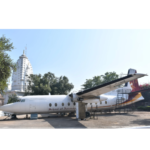
  • Real aircraft (not just models) on display.
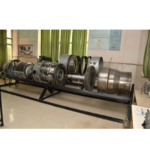
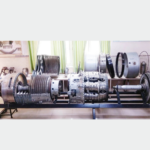
  • Training equipment (gas turbine, piston) engine.
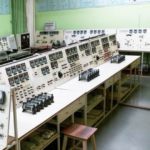
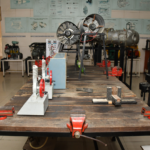
  • Workshop amenities (sheet metal, composite, electrical, hydraulic)
  • Modern equipment NDT laboratory.
  • Aviation software computer laboratories.
  1. Faculty Credentials:
  • DGCA-approved instructors
  • Experience in teaching staff in the industry.
  • Student/teacher ratio (lower is better)
  • Availability of mentorship
  1. Placement Track Record:
  • Percentage of students placed (target 75%+)
  • Firms that hire on campus.
  • Average salary package
  • Alumni network strength.
  1. Location & Accessibility:
  • Close to airports (to access OJT opportunities).
  • Hostel facilities (outstation students).
  • Security and safety of the area.
  • Transportation connectivity.
  1. Fee Structure vs Value:
  • Compare the total cost, including hidden charges.
  • Availability of scholarships and loans.
  • Payment flexibility.
  • Return on investment.

School Of Aeronautics (SOACET)

Why SOACET is the Choice of AME Admission:

  • Full DGCA Approval: AME-approved training organisation.
  • Contemporary Facilities: Real planes and engines and modern workshops.
  • 85% Placement: Good Networks in the industry.
  • Seasoned Faculty: DGCA-approved, industry-experienced instructors.
  • Flexible Fee Structure: Scholarships, EMI, and education loan assistance.
  • Hostel Facilities: Boys and girls with modern facilities.

AME Admission at SOACET:

  • Application: www.soacet.org
  • Entrance Exam: SOACET 2026
  • Direct Admission: Admitted on merit.
  • Contact: admissions@soacet.org

Career Scope After AME Admission

Knowledge of career opportunities also enables you to make a wise decision on whether to pursue AME admission or not.

Careers available to AME Graduates

Domestic Opportunities:

Airlines (Primary Employer):

  • Line Maintenance Engineer (₹3.5-6 Lakhs starting)
  • Base Maintenance Engineer (₹4-7 Lakhs)
  • Component Shop Engineer (₹4-8 Lakhs)
  • Quality Assurance Engineer (₹5-9 Lakhs)
  • Technical Services Engineer (₹6-12 Lakhs)

Key Hiring Airlines: Air India (180+ aircraft), IndiGo (300+ aircraft), SpiceJet, Vistara, Go First, Air Asia India.

MRO Organizations:

  • Aircraft Certifying Staff (₹4-8 Lakhs)
  • Engine Overhaul Specialist (₹5-10 Lakhs)
  • Avionics Technician (₹4-9 Lakhs)
  • NDT Inspector (₹3.5-7 Lakhs)

Top MRO Employers: AIESL, GMR Aero Technic, Bird Group, Taj-SIA Engineering, Air Works

Aircraft Manufacturers:

  • Quality engineer in production in HAL (₹4.5-8 Lakhs)
  • Customer Support Engineer ( 5-10 Lakh )
  • Flight Test Support (₹6-12 Lakhs)

Defense Aviation:

  • Technical Branch, Indian Air Force (₹5-8 Lakhs + benefits)
  • Aviation Wing of the Indian Navy.
  • Aircraft Maintenance, Coast Guard.

International Career Opportunities

Gulf Region (Most Demanded):

AirlineLocationSalary Range (Annual)
EmiratesDubai, UAE$40,000 – $70,000 (Tax-Free)
Etihad AirwaysAbu Dhabi$38,000 – $65,000
Qatar AirwaysDoha, Qatar$40,000 – $68,000
Saudi Arabian AirlinesRiyadh$35,000 – $60,000
Gulf AirBahrain$32,000 – $55,000

Asia-Pacific:

  • Singapore Airlines: $35,000-60,000
  • Cathay Pacific (Hong Kong): $38,000-62,000
  • Malaysia Airlines: $30,000-55,000

Europe:

  • Lufthansa Technik: €40,000-65,000
  • Air France KLM Engineering: €38,000-60,000
  • British Airways Engineering: €42,000-68,000

License Conversion Required:

  • DGCA to EASA (Europe)
  • DGCA to FAA (USA)
  • DGCA to GCAA (UAE)

Other tests are necessary, yet conversion is greatly expedited with Indian training.

Salary Progression Timeline

Career Development since AME Admission:

  • Year 0-2: Junior AME
  • Salary: ₹3.5-6 Lakhs/year

Role: Work, supervised, line maintenance.

  • Year 3-5: Licensed AME
  • Salary: ₹8-12 Lakhs/year

Role: Autonomous certifier.

  • Year 6-10: Senior AME
  • Salary: ₹12-25 Lakhs/year

Role: Complex repairs, type rating, and leadership.

  • Year 10-15: Engineering Manager
  • Salary: ₹25-45 Lakhs/year

Role: Quality, team management and planning.

  • Year 15+: Director/Chief Engineer
  • Salary: ₹40-70 Lakhs/year

Responsibility: Fleet management, strategic decisions.

Salary Enhancement Factors:

  • Type of aircraft ratings (Boeing 737, Airbus A320): +30-50% wage.
  • Dual license (B1 + B2): +40-60% salary
  • Foreign experience: 3-5x national experience.
  • Additional qualifications (B.Tech, MBA): Accelerated management development.

AME Syllabus DGCA Modules

The AME course is divided into DGCA modules that students must pass to obtain a license.

Specialized Modules

Frequently Asked Questions

Q. What is the minimum requirement to AME Admission?

A: The minimum qualification required to join AME is the successful completion of 10+2 or equivalent with Physics and Mathematics as the mandatory subjects, and with the third subject that is Chemistry or Computer Science and a minimum 50% aggregate marks in these subjects. Other options are B.Sc. with PCM or an Engineering Diploma in other areas.

A: Admission to AME is usually through institute-specific entrance examinations, such as SOACET for the School of Aeronautics or AME CET (common entrance test). Some institutes offer direct admission based on 10+2 merit marks. Verify the specific institute requirements before application.

A: The average AME course cost ranges from 4 lakhs to 12 lakhs, depending on the institute, location, and facilities. This covers tuition, practical training and DGCA examination fees. Most institutes provide scholarships, instalments, and education loan facilities to help manage the fees.

A: Yes, the DGCA approval is a necessity. Applications to the DGCA AME license can only be made by students who have undergone training at institutes approved by DGCA. Always check the status of DGCA approval of the institute before joining the AME admission in any place.

A: Yes, the B.Sc. graduates (including Physics, Chemistry, Mathematics) and the graduates of the Diploma program in Engineering (Mechanical, Electrical, Electronics) can be admitted to AME. They can be granted some subject exemptions, and they can usually cover the course in less time than 10+2 entrants.

A: The lowest age to join AME is 16 years at the time of joining. No upper age limit usually applies, although most candidates are aged 17-25. Certain quota seats of some institutes can have age requirements.

A: Absolutely yes! Girls, too, are allowed to be AME students, and their career prospects are bright. Gender diversity in technical positions is actively promoted by airlines. The AMEs are given equal pay, opportunities and career development. Several female AME professionals are successful in many leading airlines.

A: The required documents to join AME are: 10th and 12th mark sheets and certificates, transfer certificate, character certificate, passport-size photographs, Aadhar card, category certificate (where needed), and migration certificate (where needed). The DGCA medical certificate can be provided subsequently.

A: The AME admission 2026 applications are usually open in January 2026, and the deadlines are usually in March 2026. Nevertheless, early (January-February) is recommended because there is a limited number of seats and they are identified on a first-come, first-served basis when counselling.

A: Yes, it is easy to get education loans to be able to enter AME. The majority of the institutes are associated with major banks (SBI, HDFC, ICICI, Axis Bank) that can provide loans up to 100 per cent of the course fees with a moratorium period throughout the course and 5-7 years repayment after the course is completed.

Make The First Move Towards Your Aviation Career

Ready for AME Admission 2026?

The step to the process of becoming a licensed Aircraft Maintenance Engineer starts with obtaining AME admissions in a good DGCA-approved institute. As the aviation industry in India is in a historic rise and there is a severe lack of experienced and qualified AMEs, 2026 is the most ideal year to commence this enriching profession.

Why Choose AME:

  • Very high demand (15,000+ jobs required)
  • Good initial salary (₹3.5-6 Lakhs)
  • Job security (regulated by the rules of aviation safety)
  • International (Gulf, Asia, Europe)
  • Defined career path.
  • Respected profession with social prestige.

Next Steps:

  1. Check Eligibility: Check your 10+2 PCM eligibility.s
  2. Research Institutes: Compare DGCA-approved choices.
  3. Apply Early: Don’t be in a last-minute rush.
  4. Prepare: Physics, Math, Chemistry, and begin to study.
  5. Arrange Paperwork: Have all certificates on hand.
  6. Research Financing: Use check scholarship and loan programs.

Apply for AME Admission at SOACET

School of Aeronautics is accepting applications for AME Admission 2026:

  • DGCA-Approved Training.
  • 85% Placement Success Rate.
  • Modern Infrastructure with Actual Aircraft.
  • Experienced Industry Faculty.
  • Flexible Fee Payment Options.
  • Hostel Facilities Available.

How to Apply:

Visit: www.soacet.org
Email:  info@ameadmission.org

Reach out for career guidance: 9870273846,9314009022